

 Become a fan on Facebook
 Follow us on Twitter
 Star YouTube Channel



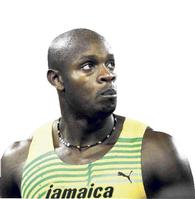

( L - R ) Asafa Powell, IAAF president Lamine Diack
Moscow (AP):
Track and field's governing body will reintroduce four-year bans for serious drug violations in 2015 and wants the World Anti-Doping Agency to deter cheats.
In a vote by acclamation at the IAAF congress, member federations backed leaders seeking stronger WADA sanctions. The International Association of Athletics Federations said it is ready to press ahead on its own if other sports refuse to toughen the sanction from two years.
The new WADA code takes effect in 2015. IAAF President Lamine Diack said yesterday that his group will move to four-year sanctions regardless of what is decided at the November 12-15 World Conference on Doping in Sport in Johannesburg.
"Up to 2015, it will still be two years," Diack said. "From then on, as far as the IAAF is concerned, it will be four years."
IAAF officials have always stressed they were ready to impose four-year sanctions and only grudgingly adapted to the two-year penalties in 1997. They fear new steps next November will again fall short in effectively deterring athletes.
"If WADA is only following some federations, who have their doubts, we have to take care of our own fate," IAAF Council member Helmut Digel told The Associated Press.
WADA wants a uniform standard across all sports and countries.
The issue has gained prominence before the World Championships, which start tomorrow in Moscow. Several high-profile doping scandals have clouded preparations for the event.
The sport's premier event, the men's 100 metres, was hit especially hard. Tyson Gay had been expected to challenge Usain Bolt for the title after a strong early season but was forced to pull out of the Worlds when he failed an out-of-competition test.
Almost at the same time, it was announced that former world-record holder Asafa Powell tested positive for the stimulant oxilofrone at the Jamaican national championships in June.
Digel said the sport is doing all it can to eradicate doping, even at the expense of a public relations setback.
"Tyson Gay? We are not protecting him," Digel said. "Asafa Powell? We are not protecting him. These are our superstars. We want to help our clean athletes."

