

 Become a fan on Facebook
 Follow us on Twitter
 Star YouTube Channel


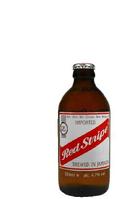
Red Stripe is aggressively looking into substituting imported malted barley with locally produced cassava and sorghum to brew beer in Jamaica.
This was revealed by Head of Corporate Relations Marguerite Cremin on Wednesday. She was responding to questions from THE WEEKEND STAR in the wake of Prime Minister Portia Simpson's announcement at the Denbigh Agricultural, Industrial and Food Show on Monday.
"This cassava and sorghum will be grown in these agro-parks within a contractual arrangement with Red Stripe," said the prime minister.
locally produced
Cremin made it clear that while the plan would see a 20 per cent use of locally produced raw material cultivated by contracted farmers by 2014, contract and other details are still being worked out.
To this end, the company has been meeting with a number of local agencies including JAMPRO, the Rural Agricultural Development Authority (RADA) and Agri-Invest, to fine-tune details for the cultivation in order to ensure a sustainable supply.
"We are still working through a lot the details and experts have flown in from Diageo (Red Stripe's parent company) to explore the possibilities," Cremin told the weekend star.
Even though Red Stripe expects to have a comprehensive business plan in place by late September to early October, Cremin admitted there is still a lot more work to be done.
Getting farmers to understand and commit to the project will be key for Red Stripe, as it relates especially to price, product and supply stability.
"We can't afford to run out of supplies," Cremin declared bluntly.
"We need tonnes and tonnes of supply, so in terms of sustainability there has to be constant planting and reaping, planting and reaping."
Red Stripe will initially explore the use of locally produced cassava and then explore testing a variety of malted barley, after committing farmers to contract prices and ensuring that the moisture content in harvested raw material is brought to specified level over a 24- or 48-hour period.
The company has similar projects in some six African countries including Nigeria where some 70 per cent of the beer produced by Diageo uses locally grown raw material.
The Diageo executive described the pending local project as a win-win situation for all, with her benefiting from the lower production costs by the reduction of its foreign- exchange outlay and farmers guaranteed a stable price and market for their produce.
She explained that a decision had not yet been taken in respect of which line, Heineken, Red Stripe or Guinness, the local material would be used, but gave the assurance that experience had shown that neither the taste nor quality would be different.

