

 RSS Feed
 Follow us on Twitter
 Star YouTube Channel


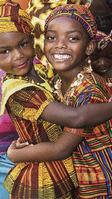
Anthony Minott photo - Allyson Johnson (left) hugs her 'African' friend Kaylee-Nicole Bramwell.
The rich and unique culture of Jamaica's heritage was showcased at Silverstone Basic school Heritage Day recently.
Principal of the institution, Asana Downer, said the students and teachers were enthused about the day's activities and the parents went all out to prepare their children to showcase each ethnic group.
"This (the heritage day celebrations) is an annual event. During the month of October each year, we take time out to reflect on our heritage. This event exposes the children to a variety of foods, clothes, music and dance. The parental involvement was great as they were all excited to dress the children as Chinese, African and Indians," Downer told the Portmore Star.
Principal Downer was kept busy inside the kitchen for most of the morning session as she helped to prepare the tasty dishes from each ethnic group, including curry chicken, roti, ackee and salt fish, run dung, chocolate tea, roasted breadfruit, just to name a few. She added: "The entire school population enjoyed the event and we look forward to the following year as the journey continues." The Chinese arrived in Jamaica on November 1 and 18, in 1854, on ships called the Vampire (195 people) and the Theresa Jane (10 people), respectively. Panamanian authorities sent them to nearby Jamaica solely due to its proximity and in exchange for Jamaican labourers. Many were already ill on arrival and were sent to hospital in Kingston where they eventually died. Less than 50 immigrants survived. The first Africans to arrive in Jamaica was in 1513 from the Iberian Peninsula after having been taken from West Africa by the Spanish and the Portuguese. They were servants, cowboys, herders of cattle, pigs and horses, as well as hunters. When the English captured Jamaica in 1655, many of them fought with the Spanish who gave them their freedom and then fled to the mountains resisting the British for many years to maintain their freedom, becoming known as Maroons. From 1845 to 1921, over 36,000 East Indians, mainly of the Hindu faith, were brought to Jamaica. Close to two-thirds of them remained. Following the abolition of slavery in the1830s, after failed attempts to source much-needed labour through European immigration, the Jamaican Government turned to India and China. Indian labourers, who had already proved successful in Mauritius, were therefore considered to be a good bet for survival in Jamaica.

