

 RSS Feed
 Email Newsletter
 Star YouTube Channel



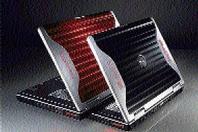
Laptops vs Notebooks vs Netbooks vs UMPCs - 'I am so confused' Part 1 of 4
Laptop, notebook, netbook and Ultra-Mobile PC (UMPC), what are they? And are there any differences between the four device categories?
Before we look at these categories, we should also acknowledge tablet PCs, high-end PDAs (personal digital assistant) and advanced smart-phones. These devices offer great alternatives for many standard or basic computer tasks. However, in this article will only cover the four categories we mentioned earlier.
Over the years, laptops have been the standard for mobile computing, but now there are several different categories that are crawling out of the woodwork, claiming their spot in the mobile market and offering reasons for their selection. This leaves many consumers confused; the benefits of each category needs to be considered along with understanding the terms that complement each category.
somewhat complicated
Much of the confusion starts with this question: 'Are the categories well defined'? In other words, is a laptop just a laptop and a notebook just a notebook? Are there any characteristics and features that distinguish one from the other? With the LCD technology vs Plasma TV technology, there are many features that separate the two. But what about laptops vs notebooks, what features or characteristics help to separate the two? Well, the answer to this is somewhat complicated and it depends on who you ask.
While there may not be any one general answer, there are some guidelines that we might find helpful in differentiating between the two. Both laptops and notebooks use the same form factor (so does netbooks). This form factor generally refers to a computer with two parts, which is a screen and a keyboard joined together by hinges.
In general, laptops are the heaviest and the largest of the four categories, although you may find some laptops as light as some notebooks.
Another issue that surrounds the 'laptop vs notebook' argument fact that mobile PCs are not categorised or classed by screen size.
technology evolves
A few years ago, notebooks' screen sizes were from 12.1 inches to 14 inches and laptops were from 15.4 inches to 19 inches, so it was much easier to say which mobile PC belonged to which category. With the evolution of mobile technology, however, manufacturers are now able to furnish smaller mobile PCs with more powerful hardware.
Even though the gap between laptops and notebooks is quickly disappearing, there are still some laptops that cannot be seen as notebooks. This is simply because of their weight, size and power.
The Lenovo ThinkPad W700 is the world's first dual screen laptop. It has a 17" standard screen and a 10.6" retractable screen that slides from out the side of the 17" display screen. The Toshiba Qosmio X505-Q850 is the most powerful laptop that Toshiba has in its inventory at the time of writing this article.
The Alienware M17x is also the most powerful laptop that Alienware has on the market at the time of writing this article. These three mobile devices are more powerful than most desktop PCs on the market today and they most certainly cannot be classified as notebooks. So even though the gap is closing between the laptop and the notebook categories, there are still some mobile PCs that will keep that gap open.
Look out for Part 2 next week Wednesday as we will compare the characteristics of a laptop and a notebook.
For questions and comments
Technical Writer: Kamar McIntyre
Tel: 849-9381
Email: kamar_mcintyre@yahoo.com

